
Nashville has long been known as “Music City,” and while many may think the moniker is centered around the country music artists that flock here armed with a guitar and a dream, the city’s musical roots dig much deeper.
Music City is an all-encompassing title that goes far beyond celebrity residents: there are iconic venues like the Grand Ole Opry and the Ryman Auditorium, dozens of record labels and recording studios are based in town, and spectacular live music billows out of bars anytime, anywhere. But the heartbeat of the city isn’t the sparkling shows or the powerful industry executives-–it’s the songwriters that put pen to paper and write a story that may turn into one of music’s biggest hits.
Songwriters are such an integral part of Nashville (and of the music industry in general), you’ll often see venues hosting “songwriter’s rounds” instead of shows headlined by a band or a solo act. During these performances, a group of writers take the stage to share the stories behind their songs, then perform their own stripped-down renditions. Being seated in an intimate venue, seeing a group of friends take the stage, then listening as they unveil they wrote your favorite song on a camping trip with your favorite artist is an authentically Nashville experience.
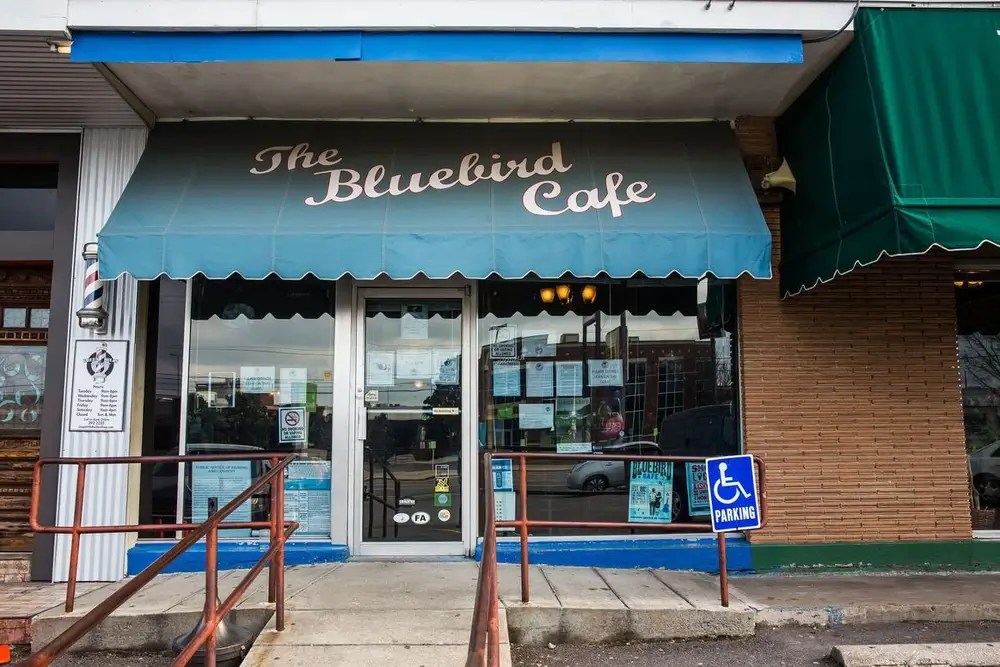
When it comes to iconic destinations in Nashville, one strip mall cafe ranks next to some of the city’s most grandiose venues. The Bluebird Cafe opened on June 3, 1982, in a south Nashville suburb serving cafe-style lunch and dinner set to the tune of live music.
Over the years, it became a hangout for those in the music industry. Soon, the acoustic acts playing a weeknight dinner service had a high potential to be playing in front of some of music’s biggest decision makers.
‘When Taylor played here in 2004, she already had in her mind who she was and where she was going,’ Nichols adds. ‘She sees herself as a songwriter first. I think that’s part of the reason she came to the Bluebird.’
“The Bluebird’s place in the city is as a home for songwriters and original music,” shares general manager Erika Wollam Nichols. “So for 40 years, that’s what the Bluebird has done: provide that opportunity for people to further their careers, to gain better skills in performance and songwriting, and it’s really been a touchstone for people who were writing their own music.”
Fast forward to November 2004, when a young 14-year-old girl took the stage donning golden curls and an acoustic guitar. Sitting in front of her was Scott Borchetta, and he’d offer her a record deal after the show not knowing she would someday be music’s brightest star.
“When Taylor played here in 2004, she already had in her mind who she was and where she was going,” Nichols adds. “She sees herself as a songwriter first. I think that’s part of the reason she came to the Bluebird… to present her songs and hope that she would be able to record them as a recording artist herself.”
The Bluebird was the subject of a documentary paying homage to its history, and during filming, the venue hosted a 40-person songwriter’s round with musicians that credit the cafe for having a major impact on their career. During songwriter Craig Wiseman’s set, Taylor herself joined him onstage to share her sentiments about the Bluebird.

She said, “when I first moved to Nashville, and even before that, I would come here and I would think that this was such a rare opportunity to see people who have written these songs in rooms up and down Music Row. But when I would play writer’s nights in the round, I was playing songs that I knew I was going to be putting out and hopefully, hopefully, like praying, people would one day hear on the radio.” She followed her monologue by playing “Love Story,” “Shake It Off,” and “Better Man,” a song she penned for country group Little Big Town.
Taylor is part of a long list of artists who got their start, or experienced massive career milestones, at the Bluebird Cafe, including Garth Brooks, Keith Urban, Vince Gill, and many more. Today, aspiring musicians still vie for their own time to shine on stage, and lines of hopeful fans wrap around the building for a chance to get a seat each night (capacity caps at 90 seats, though some tickets are available online).
Once a quarter, the venue hosts auditions where dozens of writers come in on a Sunday morning to play a minute of a song for a panel of judges. If they pass, they’re invited to play a Sunday writer’s night, which consists of six writers performing three songs each. Just as a 14-year-old once captivated a small cafe audience and now sells out world tours in minutes, you never know which aspiring artist you see at the Bluebird may be a household name in a few years time.
“I hear it every night how important that room is to people,” Nichols shares, noting the impressive nature of the cafe’s 42-year tenure. “That is what I want the Bluebird to be remembered for—as an opportunity for people to see the creators of the music that they love so much.”
 Taypedia