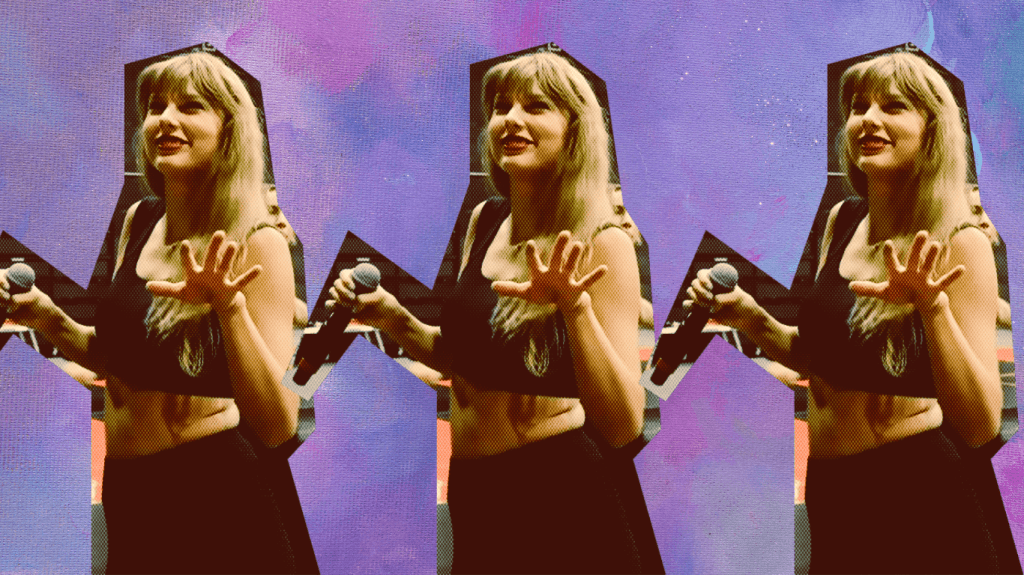
In 2006, 11-year-old me was convinced she’d just heard the best album of all time. Growing up on the old-school country classics wasn’t cool — but that all changed when a teenager with impeccable blonde curls and a blinged-out packaged it for millennial tweens. I rode Taylor Swift’s metaphorical white horse all the way through her surge to global stardom with Fearless, jealously watching YouTube videos of kids at her first official tour.
By the time she made her switch to pop with Red, it was like breaking up with a boyfriend you once really loved, but they’ve since given you the ick. I maintain that it’s her weakest album of the bunch (sorry, “All Too Well” fans), but I mostly couldn’t get over my sadness that she no longer spoke to me. Her sound became lost in a sea of new artists who were re-energizing pop in a much more unique way — thinly veiled code for saying I fleetingly became a Little Monster — and I chose to follow where other artists called me instead.
From a distance, I watched 1989, Reputation, and Lover pass by with little interest of my own. Then by chance I heard snippets of folklore during the COVID-19 pandemic, and the love I had for Taylor all those years ago came rushing back. I stayed adoring and engaged through sister album evermore before falling back out of step when Midnights was released. As you might guess, I wasn’t overly thrilled when The Tortured Poets Department became a surprise double drop.
As a result, I coined a term for myself… a “Softcore Swiftie.” When I’m enjoying Taylor’s work, I’m all in, hanging off of her every lyric as if no other music had ever been released. When I don’t engage with her choices, she’s a ship that passes in the night. While I don’t have an issue with the kind of fan I am, I’ve come to learn that other Swifties might.
A group of my oldest friends are exactly the type of Swifties I imagine are reading this. It’s baked into their veins. They can name every song in two seconds, know all the words to even the most obscure vault track, and never fail to have her on the top of their Spotify Wrapped year after year. When Taylor’s last two albums released, my friends started to joke I was a “fake fan” because I didn’t have the same knowledge as them.
This all became even more clear when we tried to get tickets for the Eras Tour. The idea of seeing Taylor sing songs live I’d dreamed of seeing since I was 13 was the most exciting thing in the world, so it made sense that I’d share the experience with my friends. After six attempts, we secured the bag, watching the US Swifties see the show for themselves through TikTok. What I saw was a barrage of hate from anyone who dared buy a ticket that wasn’t word-perfect.
It was a turning point that opened up a huge question for me… what if the Softcore Swiftie just can’t exist? Sure, being the butt of the joke with a few of my closest friends was one thing, but in a wider context, dipping in and out of Taylor’s discography has a whole other meaning. Over the years, a sense of ‘worthiness’ has developed in the fandom, and for some, you have to hit a certain criteria in order to get these perks (in this case, Eras tickets). In other cases, this is taken one step further… nothing Taylor herself does can usually be critiqued, or debated.
The latter is another reason my relationship with Taylor has had peaks and pits. I’m not a fan of her continuous and corporate-friendly release strategy, nor do I like that she only ever speaks up about issues that directly affect her. I see a lot of professional criticism online — particularly to do with her feminism — that I often agree with. Objectively, some of this is a lot of pressure to put on one woman… except she isn’t just one woman. She’s the most powerful woman in the world, and with that comes unshakeable responsibility.
At this point, I need to stress this is a “some, not all” situation — it’s just that the somes are incredibly vocal. For years, Swifties have coined a reputation for shouting everything else down at a terrifying rate, and moments like the infamous Ticketmaster wars and public criticism of Swift from figures like Billie Eilish (we all know her vague comments about vinyl releases were aimed at Taylor) haven’t helped matters. At the same time, Swifties can be amazing. Just look at the mobilizing to help raise money for Palestine or awareness for Kamala Harris’ presidential campaign. With the right priorities, Swifities are unstoppable.
If anything, this essay is a plea for softcore Swifies to be included in the wider conversation… and for the conversation itself to have more nuance. There is no wrong way to be a Swiftie, and anybody who can afford tour tickets (that’s another conversation entirely) has a right to have them. Equally, there also needs to be space to critique Taylor in a healthy way. Nobody is perfect, and everybody should be held accountable for their actions. Blindly agreeing with someone, no matter how much we love them, doesn’t do anyone any favors.
In short, I love Taylor to my core. I don’t think that is ever going to change. But what I hope changes is my relationship with the fandom. In my mind, you absolutely can be a Softcore Swiftie and chime in whenever you want — whether that’s because you love an album release or want to encourage her to speak now (haha, sorry). We need that balance, and we have to cut each other some slack. Who knows what the future holds for Taylor after Eras wraps up… but when it comes, I hope we all put our friendliest foot forward.
 Taypedia